
Veterinary Buyer's Guide
The Complete Guide to Cold Laser Therapy for Dogs & Pets
The fastest-growing segment of laser therapy. No placebo effect with animals—when treatment works, the results speak for themselves.
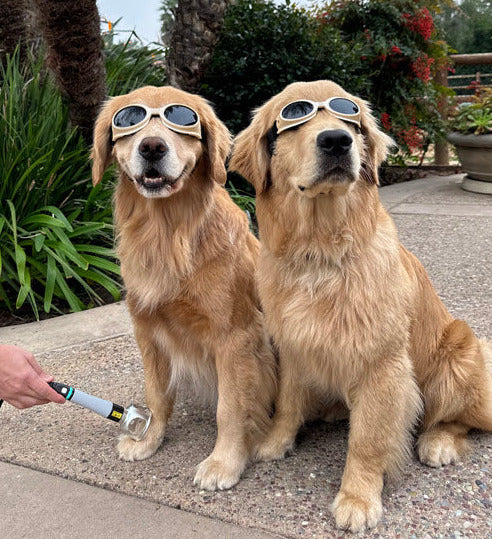
There's no placebo effect with animals. When a dog is treated with a cold laser and returns to normal behavior, it's obvious the therapy is working. We hear this every day: "My dog could not walk into the vet's office and then he jumped back into the car after the laser therapy session." New to this? Start with our plain-English guide to laser therapy for dogs.
Recommended Systems for Companion Pets
Based on years of veterinary customer feedback, these are our top recommendations:
| System | Class | Power | Wavelengths | Best For | Price |
|---|---|---|---|---|---|
 ReGen Laser Gold Standard ReGen Laser Gold Standard
|
Class 4 | Up to 104W | 6 wavelengths (450-1064nm) | Premium practices, 5-year warranty | $16,950+ |
 ATPmax Laser Best Value ATPmax Laser Best Value
|
Class 4 | Up to 62W | Dual, Tri, Quad wavelengths | Large animals, high volume, best price/watt | $10,950+ |
 EVOlaser EVOlaser
|
Class 4 | Up to 30W | Single to Quad wave | Home to mid-size practice, built-in protocols | $9,950+ |
 Avant LZ30z Pro Avant LZ30z Pro
|
Class 3B | 2,400mW | 808nm + 637nm | University equine teams, US-made, 3-year warranty | $7,875 |
 Avant Revi Portable Avant Revi Portable
|
Class 3B | 1,600mW | 405nm + 637nm | Antibacterial/antiviral violet laser | $8,550 |
 Apollo Portable Apollo Portable
|
Class 4 | 3,000mW | 810nm | Portable, simple, includes Dr. Turchin's book | $6,051 |
 EVO FX EVO FX
|
Class 4 | Up to 45W | 3 wavelengths | High-volume practices, fast treatments | $24,000+ |
 PowerMedic PL 1500 PowerMedic PL 1500
|
Class 3B | 3,000mW peak | 810nm | Simple, pulsing only, high power for 3B | $3,995+ |
 Laserex 3000 Not FDA Laserex 3000 Not FDA
|
Class 3B | 450mW | 810nm | Budget option, interchangeable heads | $2,672+ |
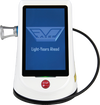
All FDA-cleared systems include training for both animal and human use. We price-match any authorized dealer.
FDA Requirements for Animals
The FDA does not regulate cold lasers for use on animals.
This means you're free to buy either FDA-cleared devices or lower-cost non-FDA devices. With a few exceptions, anyone can purchase any cold laser for animal or companion care.
⚠️ Buyer Beware
Be careful with non-FDA systems. Companies that can't organize FDA clearance often have other problems: fake specifications, illegally smuggled systems, laser pointers marketed as "therapy devices," or companies that disappear when you need support.
Our commitment: We test all lasers we sell. Our non-FDA systems are highest quality with full support.
Types of Veterinary Treatment
Broad Therapy
Tissue, Skeletal, Joint & LigamentLarge-diameter emitter (dime to silver dollar size) for structural injuries and broad tissue areas.
- Class 4 (5+ watts): Fiber optic cable to emitter
- Below 5 watts: Multiple laser diodes combined
- Minimum: Under 100mW takes too long for results
Trigger Point / Acupoint
Precise, Targeted TherapySmall-diameter emitter excites specific points to trigger systematic reactions.
- Max power: 500mW for pinpoint probes
- Minimum: Less than 50mW is under-powered
- Alternative: Broad lasers can treat trigger points by covering the entire area
Power, Wavelength & Pulsing
The Golden Rule of Veterinary Laser Efficacy
Power (The Key)
Power controls dosage. Too low = nothing happens. Higher power = faster results. We don't sell under 450mW because lower power is inconsistent.
A 500mW laser delivers 450 Joules in 15 minutes, good starting point for most therapies.
Wavelength (Depth)
800-860nm is optimal for most therapies. Red (635nm) for superficial wounds. Avoid 980nm-only systems, most energy converts to heat.
Pulsed vs CW
Pulsed: Better for most applications, prevents body adaptation. Continuous Wave: Best for nerve damage. Buy both modes if budget allows.
Priority for Buyers:
Class 4 vs Class 3B
Class 4 500mW – 60+ Watts
Best for:
- Significant animal volume
- Large or deep treatment areas
- Faster, more noticeable results
- Professional vet practices
Class 3B Up to 500mW
Same results, just slower:
- More treatments required
- Longer treatment times
- Great for home pet owners
- 1-2 animals, time not critical
Training & Protocols
Complete laser-therapy.us protocols
Adjusts for dog size and fur color
Phone/video onboarding
Ongoing help for life of laser
Why Dynamic Protocols Matter
Static printed protocols require calculator work, or your dosage can be horribly wrong. Size, fur color, and therapy objective hugely impact dosage.
View Available Protocols →Frequently Asked Questions
Do I need FDA clearance to use a laser on my pet?
No. The FDA does not regulate cold lasers for animal use. You can purchase FDA-cleared or non-FDA devices, but we recommend caution with very cheap non-FDA systems.
What power level do I need for my dog?
At least 450mW for consistent results. For larger dogs or deep tissue, Class 4 systems (5-60+ watts) provide faster treatments and better penetration.
Can I treat cats and small animals?
Yes. Small animals may benefit from trigger point therapy with smaller emitters. Most broad treatment lasers also work well with adjusted dosage protocols.
What wavelength is best for pet laser therapy?
800-860nm is optimal for most therapies. Red (635nm) works better for superficial wounds. Avoid 980nm-only systems.
Should I buy Class 3B or Class 4?
Class 4 for vet practices, large animals, or fast results. Class 3B is excellent for home pet owners with 1-2 animals where time isn't critical.
Does fur color affect treatment?
Yes. Darker fur absorbs more light at the surface. Our dynamic protocol system automatically calculates correct dosage based on fur color.
Ready to Help Your Pets Feel Better?
We've helped thousands of pet owners and veterinarians find the right laser. Schedule a free consultation or call us directly.
We price-match any authorized dealer. 30-day guarantee for professionals.